Saturday, December 22, 2012

Pistol Grips

What is it?

Pistol Grip of an AR-15
A pistol grip is essentially a type of grip that orients the shooter's hand in a vertical forward position, similar to holding a pistol.

Why are they more lethal? 

Well, the purpose of using a pistol grip on rifles such as the AR-15 or AK-47 is really to provide a comfortable grip while shooting. This style of grip arguably provides better controllability both while shooting and while maneuvering the weapon. It does not offer any direct improvement it the weapon's lethality (ammunition, magazine size and accuracy are unchanged). 


Wednesday, December 19, 2012

Time to buy

"How hard can it be?" 
                  -Jeremy Clarkson

That question is difficult to answer based on the fact that of the 50 states in this country, every state has laws regarding how and what a citizen can purchase. For the sake of argument we will start with the easiest ways since that seems to be the sticking point and address the exceptions as we go. This is long, I apologize but it is somewhat complicated.

Form 4473

Form 4473
This is where it all begins, at least when done legally. In case it is against the law, I won't be telling you the correct way to fill out this form to get a gun, but I will give you the basic points as to what it asks and what it means.

The form 4473 (Firearms Transaction Record) is the federally required form that all purchasers must fill out when purchasing or having a firearm transferred to them through a FFL holder (Federal Firearm License). It covers the basics such as height, weight, eye color, address, race, etc. To even fill one out you must present a Government issued photo ID listing your current residence.

The critical part of the form consists of 12 or so questions. Specifically the form asks you questions regarding:

  • Country of citizenship
  • Your dependance on drugs or alcohol, or lack thereof
  • If you have ever been convicted of a felony, or certain disqualifying misdemeanors
  • Your mental capacity
  • Immigration status
  • And most importantly, if you're the actual buyer.
I mention the last part because if you are not the actual buyer and you are in fact buying it for someone else you're actually committing a felony 'straw purchase' which we will talk about later.

Lying on the form 4473 is considered a felony punishable by up to 5 years in prison and the revocation of your right to own a gun, essentially, for ever (being a convicted felon disqualifies you on this form).

If you meet the legal requirements presented on this form the FFL (gun dealer) will proceed to call in a NICS check. NICS stands for National Instant Criminal background check System. This system is linked to the National Crime Information Center and other databases maintained by the FBI. This system will perform an eligibility check on you, the purchaser of the firearm, to determine if you meet the federal requirements to own a gun. The NICS check will return one of three possible responses:
  1. Approved-an approval number is then written on the 4473 form and the form is stored with the FFL for a period of not less than 20 years
  2. Hold-A more thorough check will be conducted and the sale is placed on hold. By law the NICS has three days to determine eligibility. If three days lapse with no response the sale is approved. However if after three days it is determined that at the point of sale it should have been denied, the firearm must be retrieved
  3. Deny-Exactly what it sounds like. This in and of itself is not a crime, but for any number of reasons the sale was denied. Purchasers can challenge the ruling by appealing through the appropriate legislative paths outlined in the Brady Handgun Violence Prevention Act of 1993. Denials can happen by mistaken identity (a crime was committed by a person with the same name), or because you lied on your form 4473 which again, is a felony.
If the purchaser is approved, the FFL will complete the sale and depending on the state of sale, the purchaser can then leave with their new firearm. Just like that. 

The Exceptions

Sound too easy? Well for the most part it is, provided you are a law abiding citizen with no documented mental health issues, drug/alcohol dependance or history of violence. However, different states have different rules that can make it more complicated. 

For example, in Florida a person without a license to carry a concealed weapon (CCW), must wait three business days before he/she is allowed to pickup a handgun. In Connecticut, a person without a CCW is not even allowed to drive home with their handgun (CT has certain permits and applications that must be approved both locally and on state levels that allow you to bring your handgun home, but you can't leave home with it without a CCW). Connecticut also has a law stating that anyone without a CCW must wait two weeks to pick up a long gun (rifle/shotgun) after approval. The NRA-ILA has a good breakdown of each state and their individual laws. 

Gun Show Loophole

Everyone is talking about it, but what exactly is it? The Government Accountability Office (GAO) raised concerns that gun shows provided convicted felons and other prohibited persons access to firearms without a background check. But for all intents and purposes the Gun Show Loophole is referring to Face To Face (FTF) sales where someone can buy a firearm from another private citizen without a background check, regardless of whether or not the sale is at a gun show or behind the local 7-11.

Some states do not prohibit private FTF sales of firearms, others do. A FFL holder must, repeat MUST, perform a background check regardless of sale location. Private citizens, depending on the state, do not. Connecticut for instance allows you to sell firearms privately but the transfer must be made through an FFL holder and a background check must therefore be done. Florida on the other hand has no restrictions on FTF sales, at least at the time I last lived there. 

While we are on the subject, lets clear up another misconception. You cannot, with extremely rare exceptions, walk into a gun show and buy a machine gun. Remember, the manufacture of machine guns for civilian sale was halted with the Hughes amendment in 1986. The exception being if a dealer or private citizen had one for sale at the show. Since transferable machine guns are rare, they do command prices exceeding $15,000. 

Internet Sales

Like pretty much everything else these days, you can buy guns over the internet. Whether through registered auction sites or from gun dealers in other states, anyone can order a gun. What is the catch?

All interstate sales must be completed through an FFL. Essentially you can buy any gun, provided it is legal to own in your state, and have it shipped to a local gun dealer. That dealer will then have you fill out a 4473 form and perform a NICS check. From there, the rest of the gun buying process applies, although the dealer will most likely charge you a fee. The only exception to this interstate, out of state purchasing laws, are black powder rifles which are not registered with the ATF and therefore can be shipped directly to your door.

Some quick follow up points

A CCW permit can be issued in almost any state (Illinois being the only exception). Again, depending on the state, this allows the permit holder to carry a concealed weapon or their person. Each state has laws regarding the use of said firearm and the requirements to obtain the permit. Most states require the applicant take a class (both on firearm safety and the state CCW laws) and demonstrate safe gun handling on a live fire range. Not all states have the same requirements and not all states will accept another state's permit. There has been recent attempts to standardize the permit through congress but so far nothing has been passed. Wiki has an article about the intricacies of CCW if you're interested. 

Some states require special ID cards to purchase certain firearms. NJ, IL and MA are just a few. This is in addition to a 4473 and NICS check and sometimes carry fees.

A 'Straw Purchase' is a crime by which you buy a firearm for someone else specifically someone who cannot pass, or is unwilling to submit to a background check. Even mentioning that you are buying with the intent to sell to someone will get you thrown out of a gun store (not that it is illegal since FTF sales are permitted in some states but it raises too many eyebrows and the FFL will not take the chance). Buying as a gift is a grey area which is a whole other topic. 

Monday, December 17, 2012

Telescoping and Folding Stocks of Assault Weapons


What are they? 
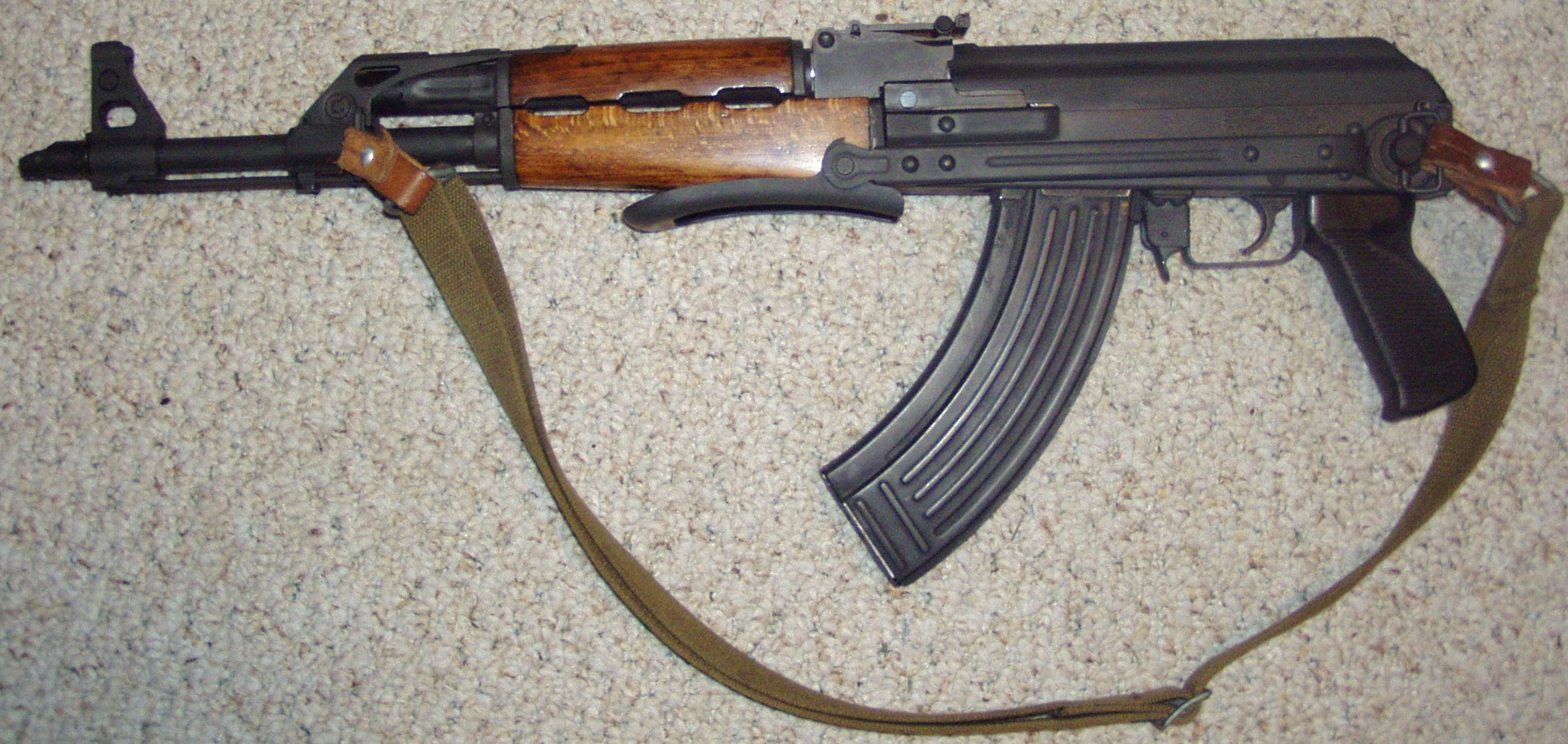
A telescoping stock is any stock that is designed to be adjusted by user to adjust the Length of Pull (LOP). A folding stock does exactly what it sounds like, folds the stock out of the way (either to the left/right or underneath the firearm as shown on the AK-47 variant to the right).

What do they do and are they more lethal?
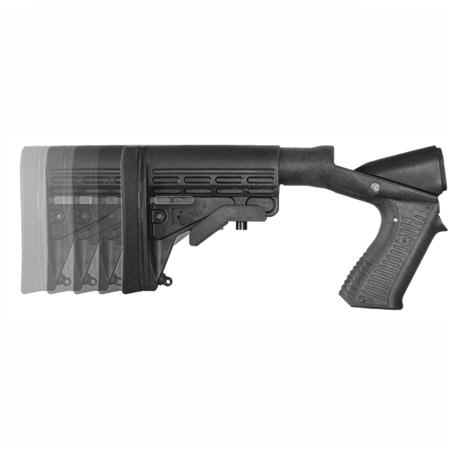
As stated, the telescoping or adjustable stock, allows the user to change the Length of Pull of the rifle. The LOP refers to the distance from the shooter's shoulder to the trigger. Each shooter has their own comfortable LOP which may change with considerations towards winter or summer clothing, firing position and body frame size. So what may work for my 5'10" frame may not work for someone who is 5'2" and so on. So the benefit of having a telescoping stock is the firearm becomes more user friendly and allows manufacturers to make 1 product that appeals to more people rather than multiple products (a mass production nightmare). The perceived drawback of a telescoping stock is that the weapon becomes more concealable and therefore more deadly.  Lets investigate that: A standard AR-15 with a barrel of 16" and an overall length of 35" with the stock extended and 32" with the stock collapsed. While I am not suggesting you attempt to go out and try and conceal a 32" 7lb piece of metal under your sweater or trench coat , I am suggesting that it would be difficult. In fact the adjustable/telescoping stock's real design intent is to allow for the adjustability of the firearm to multiple users. By banning this feature we force the users to use a potentially uncomfortable shooting position, but definitely not a less lethal one as it is just as accurate and powerful with or without this feature.

A folding stock however does, depending on the firearm, considerably shorten the overall length of the weapon and could conceivable make it easier to conceal. However, the design intent was to make the weapon easier to carry either on a sling (the center of mass is moved forward making more controllable  on your back) or occupy less space in a gun case. If you consider a smaller weapon with this kind of firepower to be more lethal then you have a case to ban this feature. However, firing a weapon with a folded stock is no easy feat. Unlike the movies the most accurate way to fire a rifle is from the shoulder and with a folding stock you lose that ability. It should be stated that most guns with this feature can be fired with or without the stock folded and the act of unfolding or folding the stock is quick and easy.


Ah, but what is an Assault Weapon?

Here is where the line starts to blur.....

The term Assault Weapon seems to have caught on since its use in the Public Safety and Recreational Firearms Use Protection Act of 1994, more commonly know as the Assault Weapons Ban of 1994. As far as I have been able to research there is no set definition of an 'Assault Weapon' but rather various laws have tried to define them by certain weapon characteristics.

Such characteristics are, for semiautomatic rifles that can accept a detachable magazine and two or more of the following features:

  • Folding or telescoping stock
  • Pistol Grip
  • Bayonet Mount or Lug
  • Flash Suppressor or a barrel threaded at the muzzle to accommodate one
  • Grenade launcher, or a gun designed to fire rifle grenades
Now it should be said that semiautomatic shotguns and pistols each have their own characteristics that define an assault weapon category. For all of these, I hate to cite Wikipedia but in this instance they are fairly informative. 

On top of that, the federal ban of 1994 included 19 guns by name. Some of which were the Colt AR-15, different versions of the AK-47 and even Uzis. These were banned based on their cosmetic similarities to their military counterparts. 

The '94 ban also banned the possession of detachable magazines capable of storing/feeding more than 10 rounds of ammunition into a firearm. 

Time for a quick detour through terminology

Clip on the left, magazines on the right
Magazine or clip? That is the $64,000 question. 

A magazine, with regards to a firearm, is a storage and feeding device that can be attached to a firearm. They can be internal (fixed) or external (detachable). Different firearms have different sized magazines and most can accept different sizes on their own (the common AR-15 platform can accept 10,20,30,100 and even 200 round magazines). 

A clip however is a device that is used to store ammunition together as a unit and is used to transfer that ammunition into the firearm's internal magazine. See the difference? Good, lets move on. 

What makes them more dangerous?

To fully examine each of these features I will discuss them in separate posts as shown below:

Pistol Grips
Bayonet Lugs
Flash Suppressors
Grenade Launchers

Read these, as I come to writing them up, and come to your own conclusion, do these really make firearms more lethal?

Lets put another perspective on it. The pictures below show two rifles as configured by the factory they are made at. Which one meets the definition of an assault weapon?
AR-15

Mini-14
The AR-15 pictured above meets all of the definitions as defined in the assault weapon ban of '94. It has an adjustable stock, pistol grip, flash suppressor and a bayonet lug. The Mini-14 doesn't meet the definition as it only has a flash suppressor. However both weapons fire the same ammunition, are capable of accepting high capacity magazines and are arguably just as accurate. They are both fine choices for self defense, hunting (where legal to use a semiautomatic firearm) and recreational purposes.

What happened to the Ban of '94?

The federal ban had a sunset clause after 10 years. So on September 13th of 2004 the ban was automatically nullified. All of the weapons that were banned on the 12th were allowed to be bought, transferred and possessed on the 13th. There have been studies, which I will cover in the coming days, as to the effectiveness of the ban both while it was in place and since its sunset. Another thing to note is that some states still have an assault weapon ban in place, in some cases identical to the expired federal ban. Examples of these states are California, New York, New Jersey and Connecticut. 

The obvious question: What is an Assault Rifle?

According to Britannica Online Encyclopedia:

A military firearm that is chambered for ammunition of reduced size or propellant charge and that has the capacity to switch between semiautomatic and fully automatic fire. 

Some background: 

The key phrase in that definition is "switch between semiautomatic and fully automatic fire." Lets discuss these types of fire:

Semiautomatic fire: The weapon will perform all the necessary steps to reload and make the gun ready for fire every time the gun's trigger is pulled. Essentially, every time the trigger is pulled the gun fires 1 time and reloads for the next shot. It will not fire again until the trigger is released and pulled again.

Fully automatic fire: The weapon will fire repeatedly until the trigger is released or the feeding device (most cases this is a magazine) is empty. This is used primarily in military operations but even there it usually reserved for suppressing fire (a massive volley of fire to suppress the enemy). Fully automatic firearms, or machine-guns, in civilian hands are heavily regulated by two major pieces of legislation.

The first is the NFA act of 1934 which defined a machine gun to be any firearm capable of firing more than once for every trigger pull. i.e. a fully automatic firearm. There were many purposes of this law but in its essence it was designed to tax, curtail and track the transfer of the various types of firearms defined in the act, among them: machine-guns. [NFA]

The second was the Firearms Owners Protection Act (FOPA) which was enacted May 19th, 1986. This act sought to bring certain protections to firearms owners that travelled through and to different states in the nation. However, the Hughes amendment (H.AMDT.777) made it unlawful to transfer or possess a machine-gun if it was made after the enactment of the act. [H.AMDT.777]

So, lets simplify these two laws: on a federal level, it is legal for a civilian to possess a machine-gun if and only if he/she pays the applicable tax the machine-gun was manufactured and registered prior to May 19th, 1986. There is not much information on legally owned machine guns but some quick figures from GunCite and their sources show that:

  • In 1995 there were 240,000 registered machine-guns in America distributed between civilian and different government entities (law enforcement for example).
  • Only two crimes have been committed with legally own machine-guns since 1934.
But lets get back on topic:

The now infamous Bushmaster AR-15, and others like it, are not assault rifles given the above definition as they are only capable of firing in the semiautomatic mode. It is illegal, as per cited legislation, to modify these types of firearms to fire in the fully automatic mode. 

Who am I, and why should you listen to me?

That is a good question. My name is Joe and I am a gun designer. And you may be surprised to hear that I too think it is time to talk about guns.

First things first. My job is to design, test and manufacture weapons(specifically guns) for police, military and civilian use. I take great pride in what I do because I know that at any given time someone's life could be on the line and depending on something I've designed. Whether that person is a law enforcement officer, our men and women in uniform, or your neighbor trying to defend his/her family from burglars (or worse); I owe it to them to not cut corners. You may think of me as callous because of what I do, and that is your opinion of which I will not belittle you for but I will disagree.

I am heartbroken, as is this nation, as to recent events and feel I have to do something. So what I am going to do is try to provide anyone who is willing the information they need to make a clear decision when it comes to guns and what must be done to prevent another tragedy. 

Why am I doing this? Because after the recent tragedies across this great country, worthwhile and needed talks will be had on subjects ranging from concealed carry, assault rifles, mental health, magazine bans, security, and statistics. Unfortunately I feel the majority of people weighing in on these topics have not had adequate access to the information they need. So I am going to try and corral all of it into a 'one stop shop' of information in the hopes that our discussions on these subjects are well informed. 

So the purpose of this blog will be to highlight anything and everything relating to the gun, its designed purpose, its intended use, how and why things work the way they do, what it takes to buy/operate safely/store firearms and what all of the terms being thrown around actually mean. I will do so without bias, citing sources where necessary and answering questions for those inclined to ask. This is not a discussion about "More guns = less violence" this is about "what is the gun show loophole?" or "what is a bayonet lug and why is it so deadly?" 

We could debate endlessly on whether or not an assault weapon ban would save lives. I am not here to answer that question, or try and prove one side of the argument or the other. I am here to give you the information about what everyone in the media, Facebook, twitter, etc are referring to so you can make the decision on whether or not banning or changing it will help save lives. 

One last thing, I'll try to post new topics every other day or so as my time permits. There is a lot to discuss, so lets get started....


I must stress again that anything posted here is not a view reflected by anyone but myself. It should not be considered to be representative of the company I work for or any of its employees. In fact I will go to great lengths to remove all views/opinions from these articles and present only published facts with cited sources. I am doing this to provide information that can be researched so that the reader will be properly informed when it comes time to talk guns.